Technologies in development

Three sizes, one autonomy stack

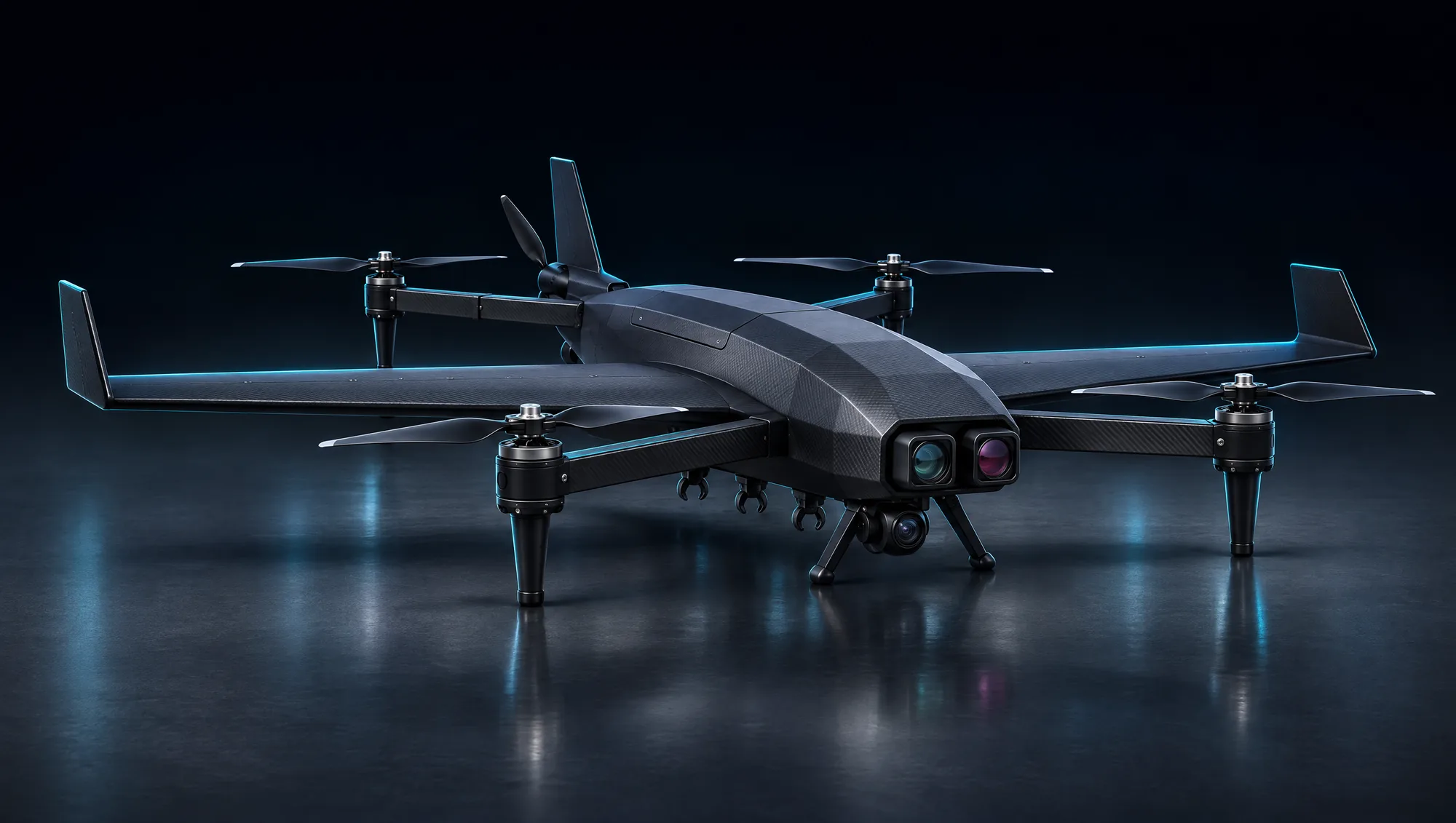
LeadTech is developing a family of three unmanned aircraft in three sizes, on a common autonomy stack and a common approach to field maintenance: a small Group 1 one-way attack quadcopter for the class addressed by the Army's Purpose Built Attritable Systems requirement, a medium heavy-lift reusable strike aircraft of the bomber/dropper class, and a large VTOL reconnaissance and surveillance aircraft. The medium and large models share one airframe design. All three are designed to navigate without GPS and to be repaired in the field.

PROGRAM STATUS — IN DEVELOPMENT. All three platforms are in active development. Descriptions on this page are general system descriptions and design intent; they are not measured performance. No production units have been delivered, no flight-test results are published, and specifications are subject to change without notice. Nothing on this page is an offer to sell or a warranty of performance.

Platform 01 · Small · One-way attack (OWA)

Group 1 strike platform

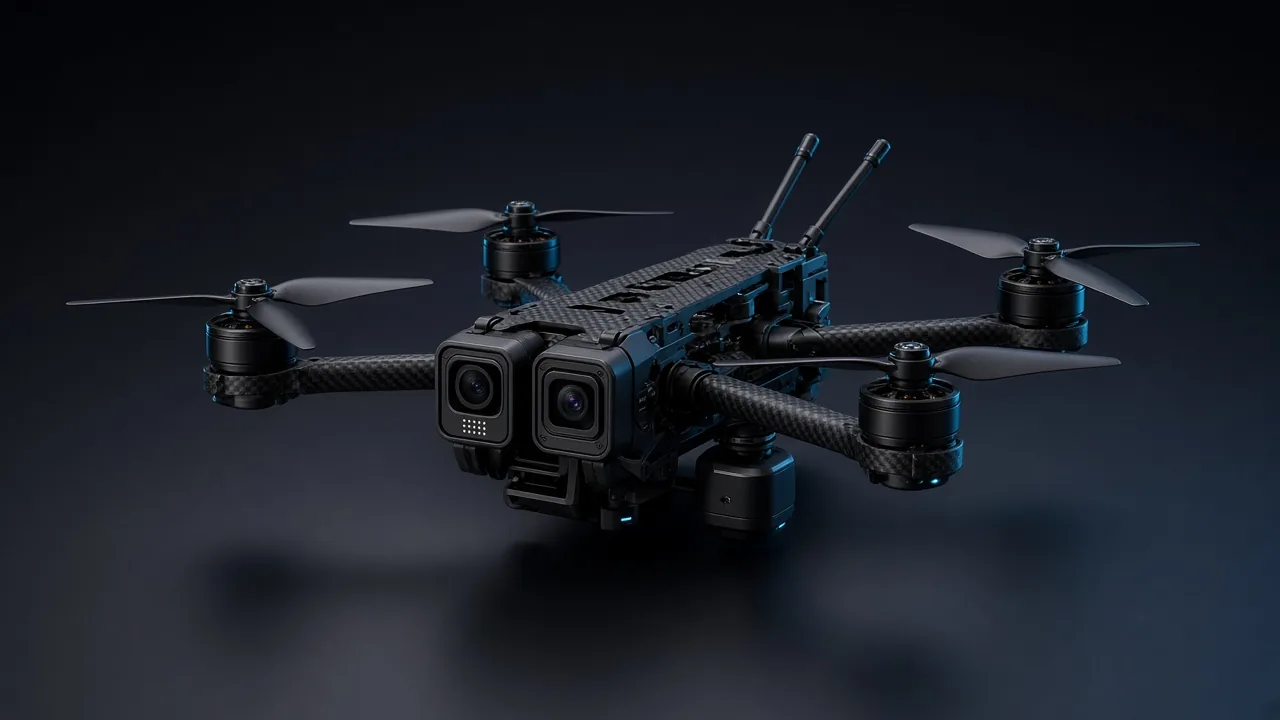
The smallest of the three: a first-person-view quadcopter with three-blade rotors, built to the attritable-systems economics the mission actually demands — low unit cost, a modular payload interface the using unit controls, and field repair without vendor involvement.

In development DoD Group 1 Quadrotor · three-blade One-way attack GPS-denied navigation Open architecture

Mission

Organic precision effects at the squad and platoon level, employed by the unit that owns the problem, without reaching back for an external fires asset. The design assumptions are contested airspace, degraded communications, and an operator who has minutes rather than hours.

Design approach

  • Attritable by economics, not by slogan. Unit cost is a design constraint carried from the first CAD session, not a result reported at the end.
  • Government-furnished effects. LeadTech supplies the airframe, the autonomy, and the integration. LeadTech does not manufacture, integrate, or supply energetics, warheads, or fuzing — effects payloads are government-furnished or supplied by a licensed integrator.
  • Soldier-modifiable. A published interface control document — mechanical mounting, available power, data — so a unit can fit a third-party payload without calling us.
  • Field-interchangeable by design. Line-replaceable arms, motors, propellers and batteries, common fasteners, and a repair kit that travels with the unit — swapped with common tools, without vendor involvement.
  • Navigation without GPS. Visual-inertial navigation so the aircraft keeps navigating when GNSS is jammed or spoofed.
  • Link-degraded behaviour. The platform is designed to continue executing its commanded task when the control link is jammed or lost, rather than aborting.
General system description — design intent, not measured performance
DoD UAS groupGroup 1
ConfigurationQuadrotor, three-blade propellers; first-person-view control
SensorsTwo forward cameras — thermal and day/night vision
AntennasTwin rear-mounted datalink antennas
Gross weight classUnder 20 lb MGTW
Payload interfaceModular, published ICD; government-furnished effects
LaunchMan-portable, one-operator, no launcher required
ControlOperator-in-the-loop with autonomous terminal behaviour on link loss
NavigationGNSS with visual-inertial fallback for GPS-denied operation
Field maintenanceLine-replaceable modules, interchangeable in the field with common tools
ArchitectureOpen — accepts government-furnished radios, payloads, and autonomy software
Supply-chain design basisFY2020 NDAA § 848, FY2023 NDAA § 817, American Security Drone Act (FY2024 NDAA §§ 1821–1826)
Program statusDesign phase — no prototype flight-test results published
Performance data is not published here. Range, endurance, speed, payload mass, datalink bands, encryption, autonomy behaviour, and interface drawings are released only to screened U.S. persons under non-disclosure agreement, following export-control review. Request a technical briefing →

Platform 02 · Medium · Bomber / dropper class

Reusable strike platform

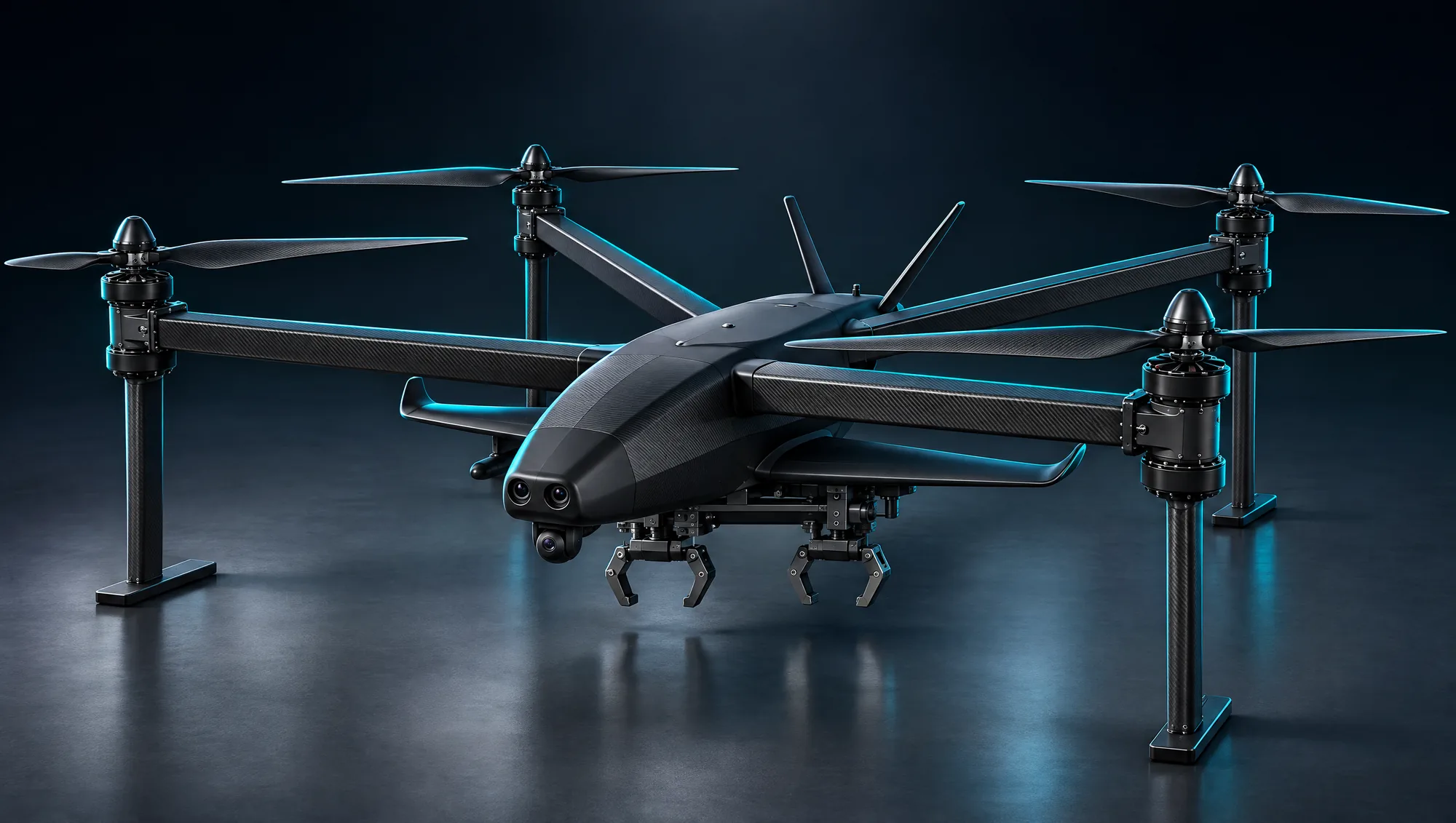
The medium, heavy-lift member of the family. It shares its airframe design with the large reconnaissance platform, on longer arms with one large propeller per rotor. It carries effects payloads to the target, releases them on the operator's command, and returns to be re-armed and re-tasked — the reusable bomber/dropper class, flown alongside one-way attack rather than instead of it.

In development Heavy-lift multirotor Payload release Reusable GPS-denied navigation

Mission

Repeatable effects at the company and platoon level from an aircraft that is recovered, not expended. A one-way attack aircraft is spent on each target; this platform is designed to release its payload and come back, so the cost of the airframe, sensors and autonomy is carried across many sorties.

Design approach

  • Heavy lift from a shared airframe. The reconnaissance platform's fuselage, wings and hardpoints on longer arms with larger rotors, so training, spares and ground control carry across both models.
  • Eyes on the release point. Two forward cameras, day and thermal, plus a downward camera under the middle of the fuselage that watches the release point.
  • Release, return, re-arm. A payload-release system on a published interface, designed for fast turnaround by the using unit between sorties.
  • Government-furnished effects. LeadTech supplies the airframe, the release mechanism, the autonomy, and the integration. LeadTech does not manufacture, integrate, or supply energetics, warheads, or fuzing — effects payloads are government-furnished or supplied by a licensed munitions partner.
  • Release on operator command. The aircraft releases a payload only when the operator commands it. The decision to employ an effect stays with the using unit.
  • Navigation without GPS. Visual-inertial navigation so the aircraft reaches the release point and returns when GNSS is jammed or spoofed.
  • Field-interchangeable by design. Line-replaceable arms, motors, propellers, batteries and release modules, swapped by the unit with common tools.
General system description — design intent, not measured performance
DoD UAS groupSet at design freeze by maximum gross takeoff weight
ConfigurationHeavy-lift multirotor on the shared airframe — four large rotors on extended arms, lift-assist wings
SensorsTwo forward cameras, day and thermal; downward camera under the fuselage
AntennasTwin rear-mounted datalink antennas
EmploymentReusable — releases its payload and returns for recovery
Payload interfaceThree hold-and-release hardpoints — one centreline, two wing — on a published ICD; government-furnished or partner-supplied effects
ControlOperator-in-the-loop; payload release on operator command only
NavigationGNSS with visual-inertial fallback for GPS-denied operation
Field maintenanceLine-replaceable modules, interchangeable in the field with common tools
ArchitectureOpen — accepts government-furnished radios, payloads, and autonomy software
Supply-chain design basisFY2020 NDAA § 848, FY2023 NDAA § 817, American Security Drone Act (FY2024 NDAA §§ 1821–1826)
Program statusDesign phase — no prototype flight-test results published
Performance data is not published here. Range, endurance, payload mass and count, release accuracy, datalink bands, encryption, autonomy behaviour, dimensions, and interface drawings are released only to screened U.S. persons under non-disclosure agreement, following export-control review. Request a technical briefing →

Platform 03 · Large · Hybrid VTOL

VTOL reconnaissance & surveillance platform

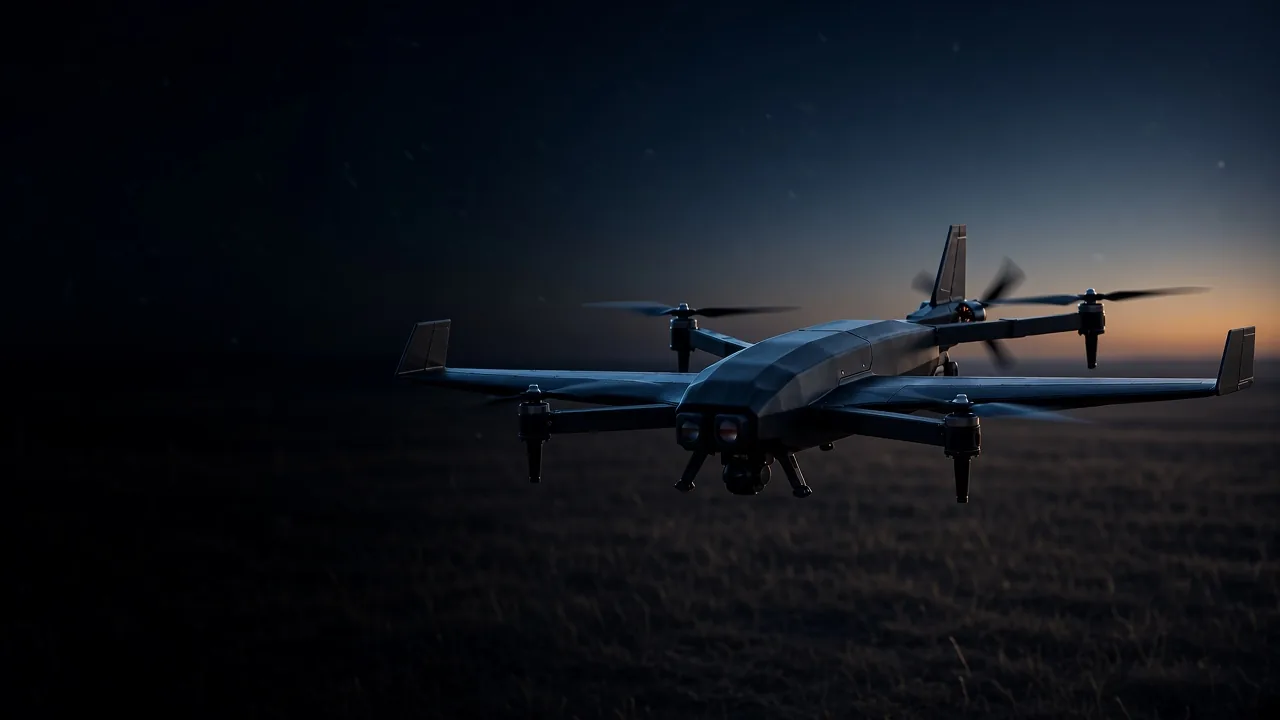
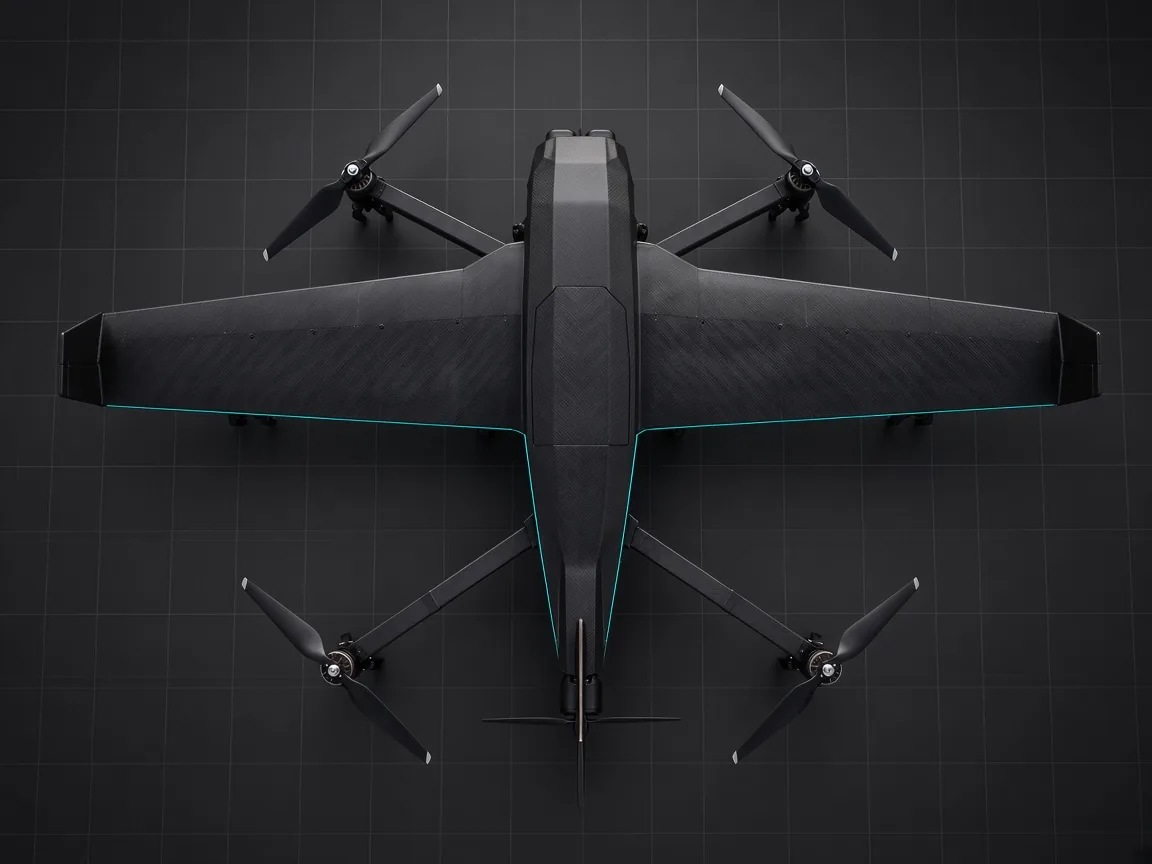
The largest of the three: a hybrid vertical-take-off-and-landing aircraft for reconnaissance and surveillance — four electric lift rotors to launch and recover from wherever the unit is, lift-assist wings and a rear pusher propeller for efficient forward flight, and three cameras that see in daylight and in thermal.

Concept · in development Hybrid VTOL EO / thermal GPS-denied navigation Payload hardpoints

Mission

Seeing further and staying up longer than a quadcopter can, while still launching from where the unit stands — no runway, no launcher, no recovery net. The aircraft is designed to climb out vertically, transition to wing-borne flight for the transit and the watch, and come back down vertically where it is needed.

Design approach

  • Vertical launch, winged cruise. Four electric lift rotors for take-off, hover and recovery; lift-assist wings and a rear pusher propeller carry the aircraft in forward flight so the rotors are not working the whole mission.
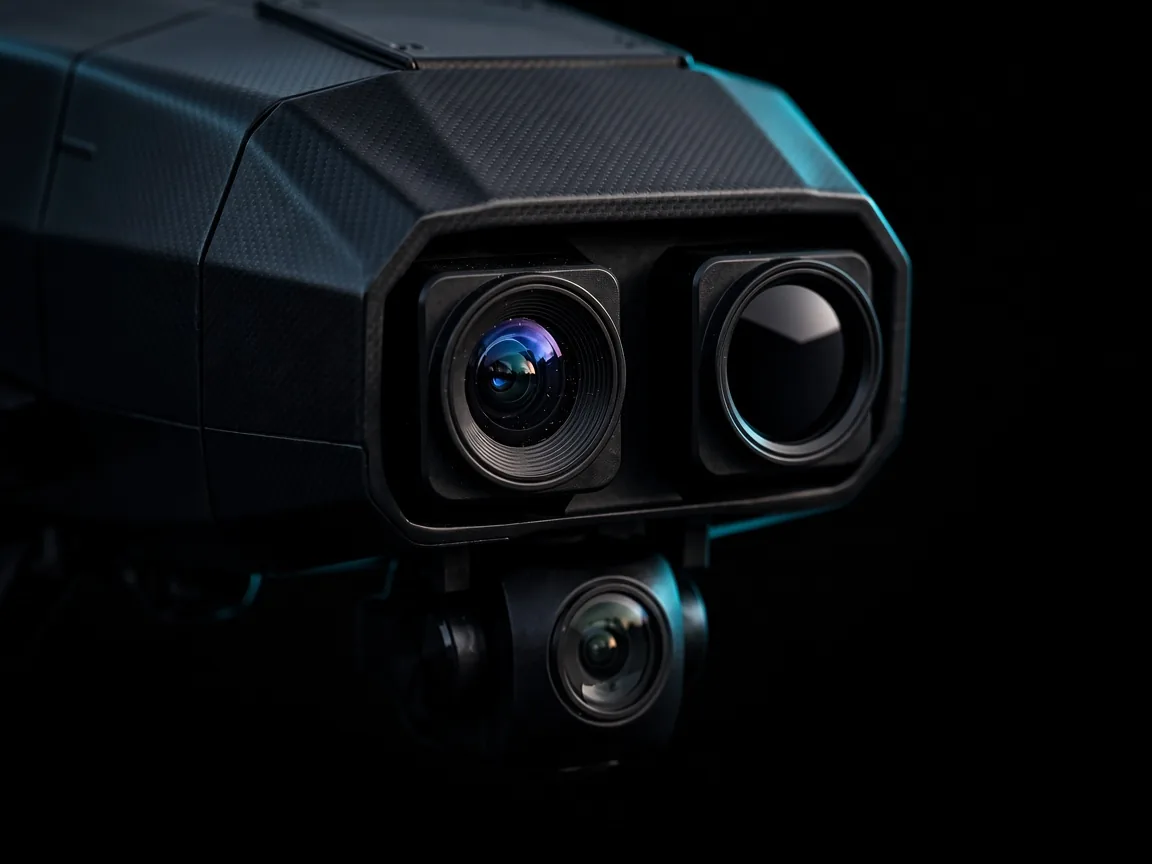
  • Three cameras, one picture. Forward optical and thermal cameras side by side, and a gimbal camera beneath the nose for what is below and ahead of the aircraft.
  • Navigation without GPS. Visual-inertial navigation so the aircraft holds position and returns home when GNSS is jammed or spoofed.
  • Detection on the aircraft. Onboard inference for detection and tracking, so useful information survives a link that is intermittent or contested.
  • Modular payload hardpoints. One centreline and two wing hardpoints with hold-and-release mounts for mission payloads such as sensors, relays and resupply.
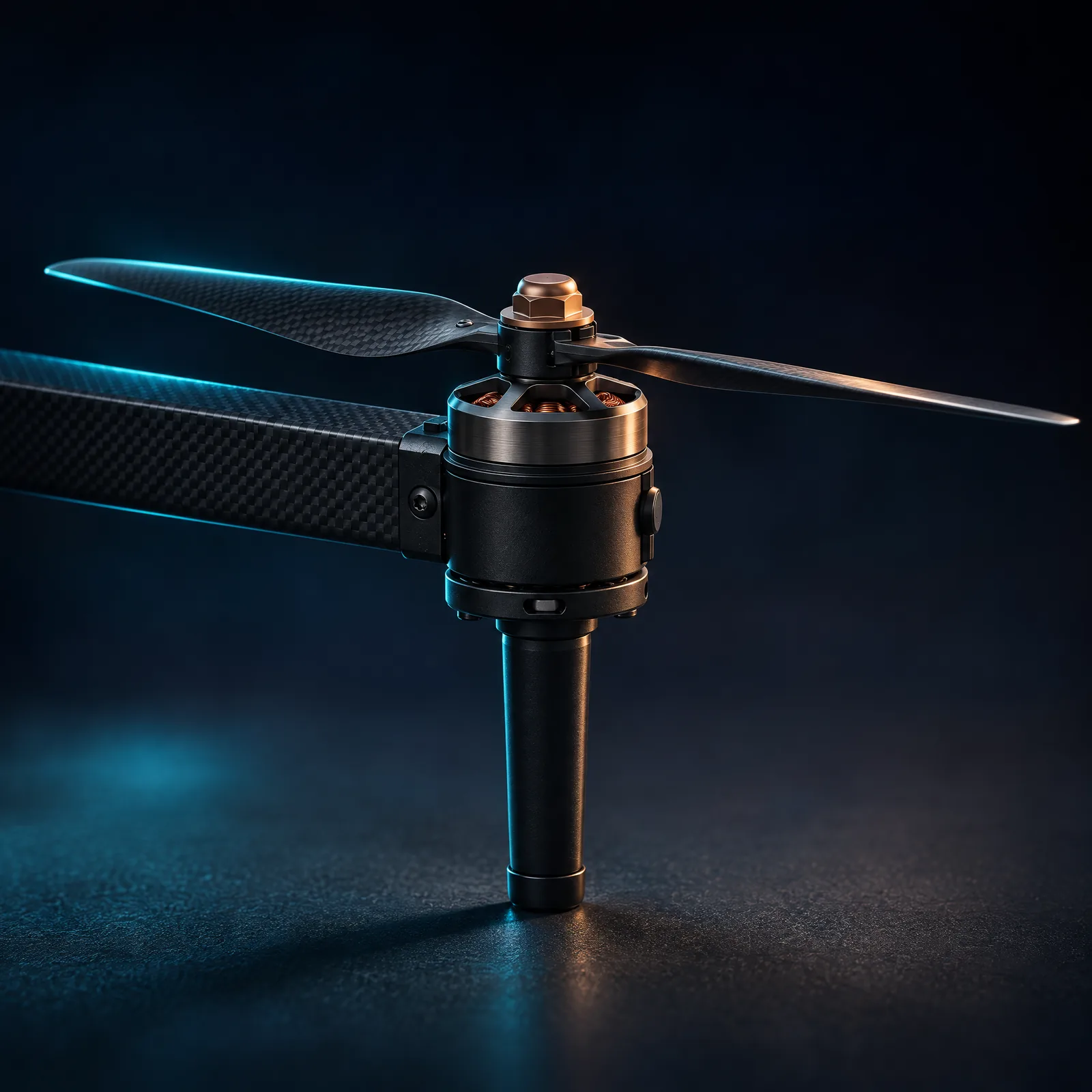
  • Field-interchangeable by design. Line-replaceable arms, motor pods, propellers, battery and sensor modules, swapped by the unit with common tools.
General system description — design intent, not measured performance
DoD UAS groupSet at design freeze by maximum gross takeoff weight
ConfigurationHybrid VTOL — four electric lift rotors, fixed lift-assist wings, rear pusher propeller for forward thrust
AirframeCarbon-fibre composite, matte-black woven finish
SensorsForward electro-optical and thermal; gimbal camera beneath the nose
Payload interfaceThree hardpoints — one centreline, two wing — with hold-and-release mounts
PowerEnclosed, top-loading battery bay
NavigationGNSS with visual-inertial fallback for GPS-denied operation
Onboard processingEdge inference for detection and tracking
Field maintenanceLine-replaceable modules, interchangeable in the field with common tools
ArchitectureOpen — accepts government-furnished payloads, radios, and autonomy software
IdentificationDesigned for Remote ID in accordance with 14 CFR Part 89
Supply-chain design basisFY2020 NDAA § 848, FY2023 NDAA § 817, American Security Drone Act (FY2024 NDAA §§ 1821–1826)
Program statusConcept design — renderings shown; no prototype flight-test results published
Performance data is not published here. Dimensions, weights, endurance, range, speed, payload mass, sensor resolution, datalink, and autonomy behaviour are released only to screened U.S. persons under non-disclosure agreement, following export-control review. Request a technical briefing →

Common to all three

One family, built for contested ground

The three aircraft differ by mission and size. What they share is designed in from the first CAD session: they keep flying when GPS does not, and a unit can put them back in the air itself.

GPS-denied navigation

Designed for visual-inertial navigation that holds position, keeps the route and brings the aircraft home when GNSS is jammed or spoofed.

Field-interchangeable by design

Designed around line-replaceable modules — arms, motors, propellers, batteries, sensor and payload modules — that a unit swaps with common tools, with flight electronics and ground control common across the family.

Designed and engineered in the U.S.

Designed and engineered in Troy, Michigan. U.S. final assembly is planned, with a bill of materials designed to exclude components from covered foreign countries and entities under FY2020 NDAA § 848 (as amended by FY2023 NDAA § 817) and the American Security Drone Act.

Carbon fibre, laid up in house

Carbon-fibre airframe parts are planned to be laid up, pressed and cured in house at the Troy facility, which is at site selection.

Planned

The common layer

Autonomy that survives the loss of the link

The hard problem in this class is not flying the aircraft. It is what the aircraft does in the seconds after the operator stops being able to talk to it. LeadTech's autonomy work targets that window, and the same stack flies on all three platforms.

A

Navigation without GPS

Visual-inertial odometry and terrain reference so position hold and return-to-home survive jamming and spoofing.

B

Onboard detection and tracking

Inference runs on the aircraft, not at the ground station, so recognition and track continuity do not depend on bandwidth.

C

Task continuation under EMCON

Commanded tasks continue through a degraded or denied link rather than aborting on signal loss.

D

Government-furnished software

The architecture is open by intent: government autonomy, third-party payload software, and LeadTech's own stack are interchangeable at published interfaces.

Human control. LeadTech designs its platforms for continuous positive identification and operator-in-the-loop employment, with autonomous behaviour scoped to navigation, sensing, and completion of an operator-commanded task. Rules of engagement and the decision to employ an effect remain with the using unit.
Designations. Platforms are identified here by mission role. Program designations and product names have not been announced.

Request a technical briefing